
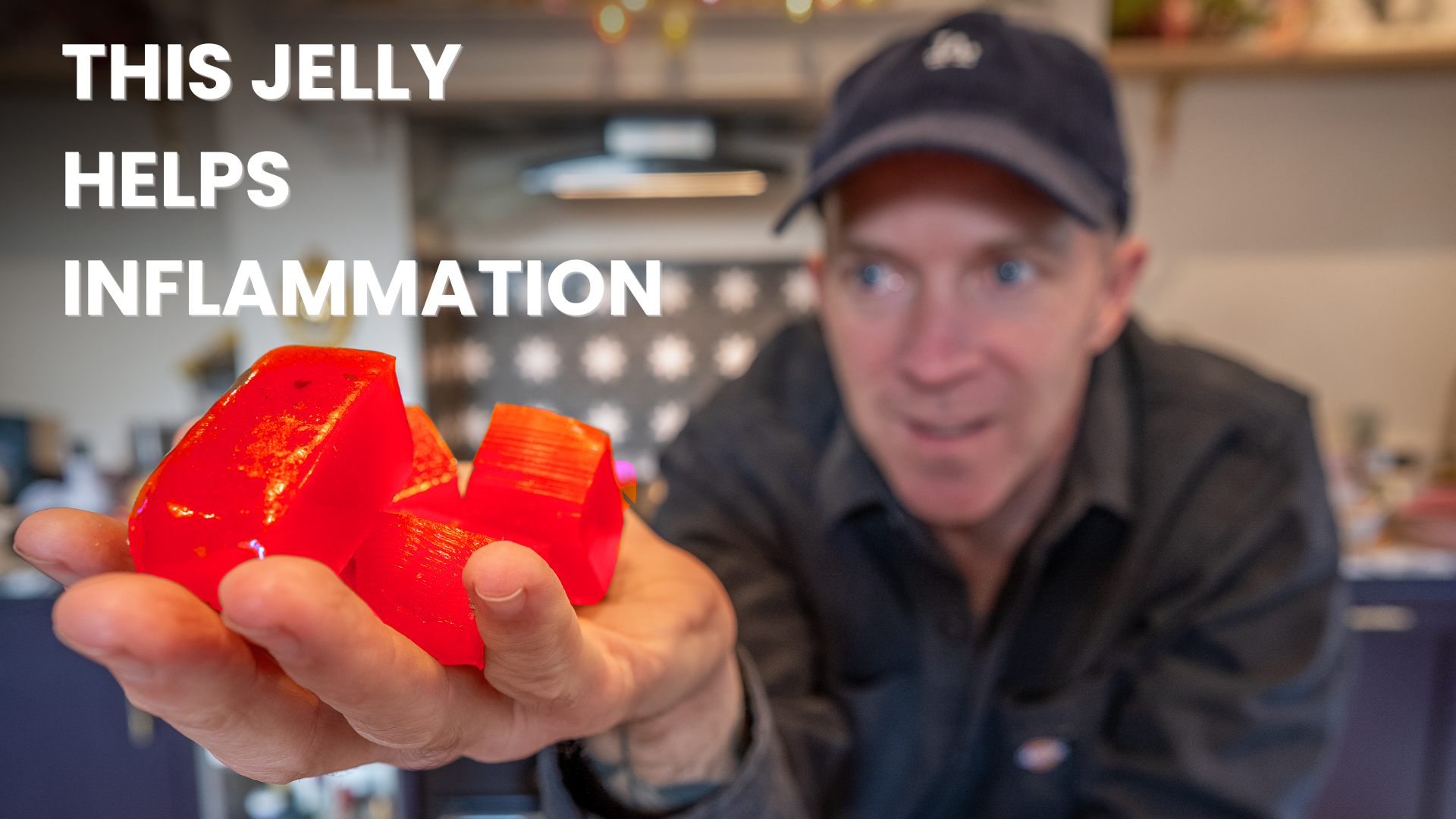
If you’re dealing with inflammation, gut irritation, bloating, or blood sugar swings after meals, this video is going to be really useful. In this video, I share an anti-inflammatory gelatin / jelly shot I use before meals to help prepare the gut before food arrives.
The goal isn’t restriction- it’s about lowering inflammatory load, calming the digestive system, and supporting more stable blood sugar and energy.
A lot of inflammation doesn’t come from the food itself. It comes from an already-irritated gut lining, poor digestive signalling, and unstable blood sugar.
When food hits that environment, the immune system reacts- which is where bloating, brain fog, anxiety, and fatigue often show up.
This anti-inflammatory gelatin works by calming the gut lining, supporting digestion, reducing glucose spikes after meals. Timing matters with this, and I explain exactly when to use it in the video, because that’s what makes the biggest difference.
If you don’t have every ingredient, that’s okay. Use what you have. The foundation is gentle heat, anti-inflammatory compounds, and gelatin.
Ingredients (with amounts):
Base. 500ml water
Spices (long simmer)
2 cinnamon sticks. Cinnamon has been used for centuries in traditional medicine because of its powerful anti-inflammatory, antimicrobial, and blood-sugar-regulating properties. Long before modern nutrition science, people noticed that cinnamon helped calm digestion, reduce bloating, and stabilise energy after meals.
Modern research now shows that cinnamon is rich in polyphenols that improve insulin sensitivity, helping the body handle glucose more effectively and reducing post-meal blood sugar spikes. This is one reason it’s been valued across cultures. It supports digestion and metabolic balance at the same time.
Using whole cinnamon sticks, rather than powders, allows these compounds to be released gently through simmering, making it easier on the gut and more traditionally aligned with how it’s been used for hundreds of years.
1 teaspoon cloves. Cloves have been used for centuries because they are one of the richest natural sources of antioxidants. They contain eugenol, a powerful compound known to reduce inflammatory signalling and help protect tissues from oxidative stress.
From a gut perspective, cloves support digestive calm by helping limit unwanted microbial activity, which can reduce irritation, bloating, and immune activation after meals. This makes them especially useful when inflammation is being driven by an already-sensitive gut lining.
Using a small amount (around one teaspoon) provides these benefits without overwhelming digestion, helping create a calmer environment before food arrives.
1 teaspoon cardamom. Cardamom has been used for hundreds of years as a digestive-supporting spice, particularly for reducing gas, bloating, and digestive discomfort. It helps improve gastric emptying, meaning food moves through the digestive system more smoothly rather than sitting and fermenting.
Cardamom also contains compounds with anti-inflammatory and blood-sugar-modulating effects, helping digestion feel calmer and more balanced after meals. This makes it especially useful for people who notice heaviness, pressure, or bloating shortly after eating.
1 teaspoon nutmeg. Nutmeg has traditionally been used as a warming, calming spice that supports both digestion and the nervous system. This matters because the gut and nervous system are deeply connected. When the nervous system is calmer, digestion tends to work more smoothly and inflammation is reduced.
Nutmeg contains natural compounds that have mild anti-inflammatory and soothing effects, helping ease digestive tension and discomfort after meals. It’s often used in small amounts to support digestive rhythm and relaxation, rather than stimulation.
Using around one teaspoon adds warmth and balance to the blend without overpowering digestion, helping create a calmer internal environment before eating.
Fresh ingredient (add after initial 20 minutes simmer)
4/5 thin slices fresh ginger Delicate polyphenols (steep gently, no boil). Ginger has been used for centuries as a powerful digestive and anti-inflammatory root. It contains active compounds called gingerols and shogaols, which help reduce inflammatory signalling, calm gut irritation, and support overall digestive comfort.
Ginger improves gut motility, helping food move through the digestive system more efficiently. This reduces the chance of food sitting, fermenting, and causing bloating or pressure. It’s also been shown to support blood sugar stability by improving insulin response after meals.
Using a few thin slices of fresh ginger provides strong benefits without overwhelming the gut, helping digestion feel smoother and more controlled before food arrives.
1 tablespoon green tea. Green tea has been used for centuries because it’s rich in powerful polyphenols, particularly catechins like EGCG. These compounds help reduce inflammation, protect cells from oxidative stress, and support healthier blood sugar responses after meals.
Green tea also improves insulin sensitivity, which helps blunt post-meal glucose spikes and reduces metabolic stress on the body. This makes it especially useful when the goal is to calm inflammation rather than stimulate digestion aggressively.
1 tablespoon hibiscus. Hibiscus has been used traditionally for its cooling, anti-inflammatory properties and its ability to support circulation and metabolic health. It’s rich in anthocyanins, powerful antioxidant compounds that help reduce oxidative stress and calm inflammatory pathways in the body.
Hibiscus also supports blood vessel function and helps improve metabolic flexibility, which can contribute to steadier blood sugar responses after meals. This makes it a useful addition when the goal is to reduce inflammatory load rather than stimulate digestion too strongly.
Because hibiscus compounds are delicate, it’s best steeped gently rather than boiled, allowing it to support the gut and nervous system without irritation.
Foundation.
48 g colourless, sugar-free, flavourless gelatin. Gelatin is the foundation of this recipe. It’s rich in the amino acid glycine, which plays a key role in calming inflammation, supporting the gut lining, and regulating the nervous system.
Glycine helps strengthen the intestinal barrier, making the gut less reactive when food arrives. This is important because a compromised gut lining is a major driver of bloating, immune activation, and post-meal discomfort.
Gelatin also slows digestion slightly, which helps blunt blood sugar spikes and supports a more stable insulin response. This turns the drink from a simple anti-inflammatory tea into a pre-meal gut-conditioning tool.
Using colourless, sugar-free, flavourless gelatin allows you to get the benefits without additives, giving the gut exactly what it needs to feel calmer and more resilient before eating.
How to Use.
Consume 10–20 minutes before meals Especially helpful before:
⭐️ larger meals
⭐️ higher-protein meals
⭐️ evening meals This is designed to calm the gut before digestion begins, helping reduce inflammation at the source.
👋🏽 Who This May Help This approach is especially useful if you experience:
⭐️ bloating after meals
⭐️ brain fog
⭐️ fatigue after eating
⭐️ blood sugar swings
⭐️ chronic low-grade inflammation
*The information provided is for informational purposes only. It should not be used as a basis for self-diagnosis, self-prescription or self-treatment. Consult your doctor if you are concerened about your health.
THE GELATIN I USED IN VIDEO: https://amzn.to/44NcT80
BEST MCT OIL (I use this daily): https://amzn.to/4sofYoU
THE KATTO KNIFE I USE: https://prz.io/5ZymPDGHO